

Have you ever wondered how doctors peer into the intricate workings of your brain and nervous system without surgery? The answer often lies in electroneurodiagnostic technology, a fascinating and crucial field in modern medicine. This specialized area focuses on recording and analyzing the electrical activity of the brain, spinal cord, and peripheral nerves to diagnose a wide array of neurological disorders. In 2026, its role in accurate and timely diagnosis is more critical than ever, empowering healthcare professionals to understand and treat conditions affecting millions worldwide.
Key Takeaways
- Electroneurodiagnostic (END) technology is a non-invasive medical field that measures the electrical activity of the nervous system.
- It plays a vital role in diagnosing conditions like epilepsy, sleep disorders, nerve damage, and stroke.
- Key tests include EEG, NCS, EP, and PSG, each revealing different aspects of neurological function.
- END technologists are specialized healthcare professionals who operate advanced equipment and interpret raw data.
- The field is continually evolving with new technologies, enhancing diagnostic accuracy and patient care in 2026.
Understanding the Core of Electroneurodiagnostic Technology
At its heart, electroneurodiagnostic technology is about listening to the body’s electrical signals. Our nervous system, from the brain to the tips of our fingers, operates on tiny electrical impulses. When these impulses are disrupted or behave abnormally, they can signal a neurological problem. END technologists use sophisticated equipment to capture, amplify, and record these electrical patterns, providing doctors with invaluable insights.
Think of it like an electrician troubleshooting a complex wiring system. Instead of wires, END technologists work with nerves; instead of a voltmeter, they use specialized machines to measure millivolts of electrical activity. This non-invasive approach makes it a cornerstone of neurological diagnosis, avoiding the need for more intrusive procedures in many cases.
The Historical Roots of Electroneurodiagnostic Technology
While seemingly futuristic, the foundation of electroneurodiagnostic technology dates back to the early 20th century. Hans Berger, a German psychiatrist, published the first human electroencephalogram (EEG) in 1929, demonstrating that the human brain emits continuous electrical oscillations [1]. This groundbreaking discovery opened the door to understanding brain function and dysfunction in a completely new way. Since then, the field has continuously evolved, with technological advancements making tests more precise, accessible, and comprehensive.
From bulky, room-sized machines to portable, digital devices, the journey of electroneurodiagnostic technology reflects a century of innovation aimed at deciphering the complex language of the nervous system. The methods have become standardized, and the training of technologists more rigorous, solidifying its place in diagnostic medicine.
Key Tests Performed in Electroneurodiagnostic Technology
Electroneurodiagnostic technology encompasses several distinct tests, each designed to evaluate different aspects of the nervous system. Understanding these specific procedures helps clarify the breadth of this field.
Electroencephalography (EEG)
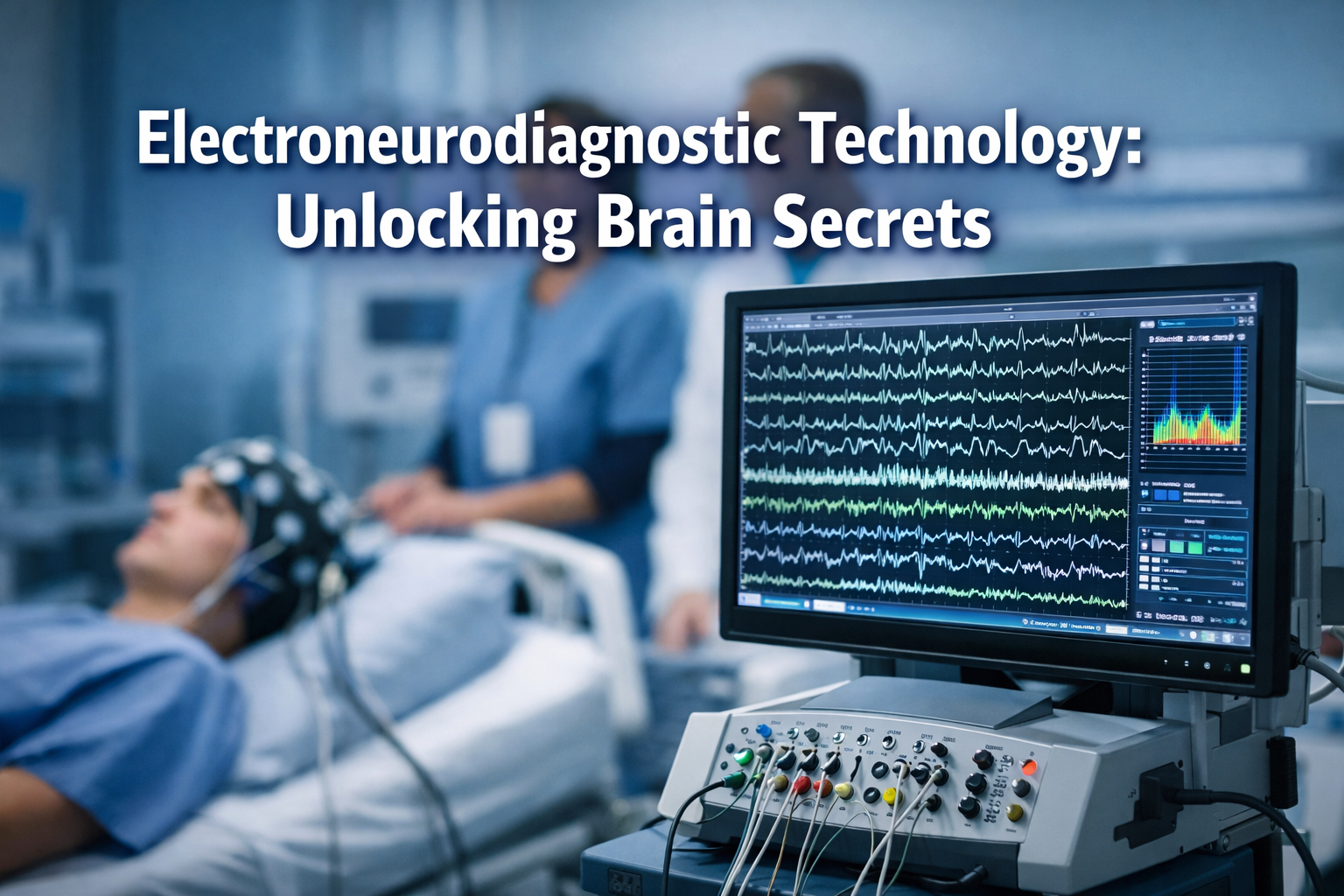
An Electroencephalogram (EEG) is perhaps the most well-known END test. It measures electrical activity in the brain through electrodes placed on the scalp. This test is crucial for:
- Diagnosing Epilepsy: EEGs can detect abnormal brain wave patterns associated with seizures. ⚡
- Evaluating Sleep Disorders: Used in polysomnography to monitor brain activity during sleep.
- Assessing Brain Function: Can help determine the effects of head injuries, brain tumors, inflammation, or stroke.
- Monitoring Brain Activity: In comatose patients or during surgery (intraoperative monitoring).
Patients typically relax in a comfortable chair while electrodes are affixed. The procedure is non-invasive and painless, usually lasting 30-60 minutes, though longer monitoring might be required [2].
Nerve Conduction Studies (NCS)
Nerve Conduction Studies (NCS) evaluate the function of motor and sensory nerves in the arms and legs. This test measures how fast electrical signals travel through a nerve. It helps diagnose:
Related Posts:
- How Is Technology Changing Society? A Deep Dive into…

- Is CRM a Technology? Unveiling the Digital Core of…

- How Has Technology Changed The Economy?

- Unlocking Genetic Insights: What is DNA Microarray…

- What is Flash Face Technology? Unlocking Precision…

- How Does Technology Aid Workplace Productivity in 2026?

- Carpal Tunnel Syndrome: A common nerve compression disorder.
- Neuropathy: Damage to peripheral nerves, often caused by diabetes or autoimmune diseases.
- Sciatica: Nerve pain radiating along the sciatic nerve.
- Guillain-Barré Syndrome: A rare disorder where the immune system attacks healthy nerve cells.
During an NCS, small electrodes are placed on the skin over the nerve, and a mild electrical impulse is delivered, causing a brief tingling sensation. The speed and strength of the nerve’s response are recorded.
Evoked Potentials (EP)
Evoked Potentials (EP) measure the brain’s electrical response to specific sensory stimuli. This helps assess the pathways from the sensory organs to the brain. There are three main types:
- Visual Evoked Potentials (VEP): Measures the brain’s response to visual stimuli (e.g., checkerboard patterns) to check the optic nerve and visual pathways. 👁 ️
- Brainstem Auditory Evoked Potentials (BAEP/ABR): Measures the brain’s response to auditory clicks to assess hearing and the brainstem pathway. 👂
- Somatosensory Evoked Potentials (SSEP): Measures the brain’s response to electrical stimulation of a peripheral nerve (e.g., in the wrist or ankle) to evaluate sensory pathways to the brain. 👋
EP tests are particularly useful in diagnosing conditions like multiple sclerosis, optic neuritis, and other neurological disorders affecting sensory pathways [3].
Polysomnography (PSG)
Polysomnography (PSG), commonly known as a sleep study, is a comprehensive test used to diagnose sleep disorders. Performed overnight, it records multiple physiological parameters:
- Brain waves (EEG)
- Eye movements (EOG)
- Muscle activity (EMG)
- Heart rhythm (ECG)
- Breathing patterns and oxygen levels
PSG is the gold standard for diagnosing conditions like sleep apnea, narcolepsy, restless legs syndrome, and insomnia. 😴
The Role of the Electroneurodiagnostic Technologist in 2026
The individuals who perform these critical tests are highly trained Electroneurodiagnostic Technologists (END Technologists). Their role goes far beyond simply operating equipment. They are patient-care specialists, technical experts, and crucial members of the neurological diagnostic team.
“Electroneurodiagnostic technologists are the unsung heroes of neurological diagnosis, transforming complex electrical signals into actionable insights for patient care.”
Key responsibilities of an END Technologist include:
- Patient Preparation: Explaining procedures, attaching electrodes precisely, and ensuring patient comfort and safety.
- Equipment Operation: Setting up, operating, and troubleshooting advanced END equipment.
- Data Acquisition: Monitoring ongoing tests, identifying artifacts (unwanted signals), and adjusting parameters for optimal data quality.
- Data Analysis & Reporting: Reviewing raw data, selecting significant recordings, and creating preliminary reports for neurologists.
- Intraoperative Monitoring (IOM): Assisting neurosurgeons by monitoring brain and nerve function during complex surgeries to prevent neurological damage.
- Maintenance & Quality Control: Ensuring equipment is calibrated and maintained to meet safety and accuracy standards.
The demand for skilled END technologists continues to grow in 2026, driven by an aging population and increasing awareness and diagnosis of neurological conditions.
Career Paths in Electroneurodiagnostic Technology
A career in electroneurodiagnostic technology offers diverse opportunities in various healthcare settings:
| Career Path | Typical Setting | Description |
|---|---|---|
| EEG Technologist | Hospitals, outpatient clinics | Specializes in conducting routine and long-term EEGs for epilepsy and other brain disorders. |
| NCS/EMG Technologist | Neurology clinics, rehabilitation centers | Focuses on nerve conduction studies and sometimes assists with electromyography (EMG). |
| Polysomnographic Technologist (Sleep Tech) | Sleep centers, hospitals | Conducts sleep studies (PSGs) to diagnose sleep disorders. |
| Intraoperative Neurophysiologic Monitor (IONM) Technologist | Operating rooms | Monitors nervous system function during surgery to help prevent damage. |
| Lead/Supervisor Technologist | Hospitals, large clinics | Manages teams, oversees operations, and provides training. |
| Educator/Trainer | Academic institutions, professional associations | Trains future END technologists. |
Education and Certification in Electroneurodiagnostic Technology
To become a competent END technologist, specific education and certification are essential. Formal training ensures professionals have the knowledge and practical skills to perform complex neurological tests accurately and safely.
Educational Pathways for Electroneurodiagnostic Technology
Most aspiring END technologists pursue one of the following educational pathways:
- Associate’s Degree: Many community colleges offer 2-year Associate of Applied Science (A.A.S.) programs specifically in Electroneurodiagnostic Technology. These programs combine classroom instruction with extensive clinical rotations.
- Certificate Programs: For individuals who already hold a degree in a related healthcare field, 1-year certificate programs are available to specialize in END technology.
- On-the-Job Training (Historical/Limited): While historically a route, formal education is now overwhelmingly preferred and often required for certification and employment.
Curricula typically cover neuroanatomy, neurophysiology, patient care, instrumentation, waveform analysis, and ethics.
Importance of Certification in Electroneurodiagnostic Technology
Certification is paramount in the field of electroneurodiagnostic technology. The primary certifying body in the United States is the American Board of Registration of Electroencephalographic and Evoked Potential Technologists (ABRET). ABRET offers several credentials:
- R. EEG T.: Registered Electroencephalographic Technologist
- R. EP T.: Registered Evoked Potential Technologist
- R. NCS T.: Registered Nerve Conduction Study Technologist
- CNIM: Certified in Neurophysiologic Intraoperative Monitoring
- CLTM: Certified in Long Term Monitoring
- CSGT: Certified Sleep Technologist (offered by the Board of Registered Polysomnographic Technologists – BRPT)
Certification demonstrates a technologist’s competency, adherence to professional standards, and commitment to lifelong learning. Many employers require ABRET certification for employment, and it often leads to higher salaries and career advancement opportunities [4].
Electroneurodiagnostic Technology in Action: Diagnosing Sleep Disorders
To illustrate the practical application of electroneurodiagnostic technology, let’s consider its vital role in diagnosing sleep disorders. Millions of people suffer from conditions like sleep apnea, insomnia, and narcolepsy, which can severely impact quality of life and overall health.
A Polysomnogram (PSG), as mentioned earlier, is the definitive diagnostic tool. Here’s how END technology facilitates this:
- Preparation: A polysomnographic technologist carefully attaches electrodes to the patient’s scalp (for EEG), face (for eye movements), chin (for muscle activity), and limbs (for leg movements). Sensors are also placed to monitor breathing, heart rate, and oxygen saturation.
- Overnight Monitoring: Throughout the night, the technologist monitors the patient from a separate control room, ensuring all equipment is functioning correctly and intervening if any electrodes become dislodged. They observe sleep stages, breathing events (e.g., apneas), leg movements, and heart rhythm changes.
- Data Analysis: In the morning, the vast amount of recorded data is meticulously analyzed by the technologist and interpreted by a sleep physician. They identify patterns indicative of specific sleep disorders. For example, frequent pauses in breathing combined with drops in oxygen levels point to sleep apnea.
- Diagnosis and Treatment: Based on the PSG findings, the physician can accurately diagnose the sleep disorder and recommend appropriate treatment, which might range from lifestyle changes and CPAP therapy to medication or surgery.
Without the precision and detail provided by electroneurodiagnostic technology, diagnosing and managing complex sleep disorders would be significantly more challenging, if not impossible.
The Future of Electroneurodiagnostic Technology in 2026 and Beyond
The field of electroneurodiagnostic technology is not static; it is constantly evolving with advancements in neuroscience and engineering. Looking ahead to 2026 and beyond, several trends are shaping its future:
- Artificial Intelligence (AI) and Machine Learning: AI is increasingly being integrated into END equipment for automated artifact detection, pattern recognition in EEG data, and even preliminary interpretation, assisting technologists and neurologists in faster and more accurate diagnoses.
- Telemedicine and Remote Monitoring: The pandemic accelerated the adoption of telemedicine. Remote EEG monitoring and home sleep studies are becoming more sophisticated, allowing patients to undergo tests in their familiar environments while technologists monitor from a distance.
- Wearable Devices: Emerging wearable neurophysiological monitoring devices are making continuous monitoring more accessible, especially for long-term data collection outside of a clinical setting, for conditions like epilepsy or chronic sleep issues.
- Advanced Imaging Integration: Closer integration with neuroimaging techniques (MRI, CT) to provide a more comprehensive picture of brain structure and function, leading to more precise diagnostic and therapeutic strategies.
- Improved Electrode Technology: Development of dry electrodes and less invasive techniques will make tests more comfortable and quicker to set up for patients.
These innovations promise to make electroneurodiagnostic services more efficient, accessible, and powerful, ultimately improving patient outcomes.
Conclusion: The Indispensable Role of Electroneurodiagnostic Technology
In conclusion, what is electroneurodiagnostic technology? It is a specialized, vital branch of healthcare dedicated to unraveling the mysteries of the brain and nervous system through the measurement of their electrical activity. From diagnosing life-altering conditions like epilepsy and stroke to identifying the root causes of sleep disorders, END technology provides the critical diagnostic data that informs effective treatment plans.
The dedicated professionals in this field – the electroneurodiagnostic technologists – are at the forefront of neurological diagnosis, skillfully operating advanced equipment and translating complex biological signals into meaningful clinical information. As we move further into 2026, the ongoing advancements in AI, telemedicine, and wearable technology ensure that electroneurodiagnostic technology will continue to be an indispensable tool in modern medicine, offering hope and clarity to countless individuals facing neurological challenges.
Actionable Next Steps:
- For Patients: If you or a loved one are experiencing neurological symptoms, consult your primary care physician or a neurologist to discuss whether electroneurodiagnostic testing is appropriate.
- For Aspiring Professionals: Research accredited electroneurodiagnostic technology programs and explore certification options with organizations like ABRET to embark on a rewarding career in this dynamic field.
- For Healthcare Providers: Stay informed about the latest advancements and best practices in END technology to ensure optimal diagnostic capabilities and patient care in your facility.
Frequently Asked Questions about Electroneurodiagnostic Technology
How to Prepare for an Electroneurodiagnostic Test
Preparing for an electroneurodiagnostic test ensures accurate results and a smooth procedure. Follow these steps for common tests like EEG or polysomnography.
Step 1: Consult Your Doctor for Specific Instructions
Always begin by discussing your upcoming test with your doctor or the END department. They will provide precise instructions tailored to your specific test and medical history. Some medications may need to be temporarily stopped, or dietary restrictions might apply.
Step 2: Wash Your Hair Thoroughly
For tests like an EEG or evoked potentials, it is crucial to wash your hair the night before or the morning of the test. Do not use any conditioners, hairsprays, gels, or oils, as these can interfere with electrode placement and signal quality. Clean, dry hair ensures better adhesion of electrodes.
Step 3: Avoid Caffeine and Stimulants (If Advised)
Depending on the test, you may be asked to avoid caffeine, energy drinks, and other stimulants for a certain period before the procedure. This is especially important for sleep studies (polysomnography) or tests where sedation might be used, as these substances can alter brain activity.
Step 4: Ensure Adequate Sleep (Unless Sleep Deprivation is Required)
For most END tests, getting a good night’s sleep is beneficial. However, for some specific EEG procedures (e.g., sleep-deprived EEG), your doctor might instruct you to intentionally get less sleep. Always follow your physician’s specific advice regarding sleep prior to the test.
Step 5: Wear Comfortable Clothing
Dress in loose, comfortable clothing to ensure you are relaxed during the procedure. You may be lying down for an extended period, so comfort is key. Avoid wearing jewelry or accessories that might interfere with electrode placement or cause discomfort.
Step 6: Bring Necessary Information
Remember to bring your health insurance information, any doctor’s orders, and a list of your current medications. It’s also helpful to have a list of any questions you may have for the technologist.
Defined Term: Electroneurodiagnostic (END) Technology
References
- Berger, H. (1929). Über das Elektrenkephalogramm des Menschen. Archiv für Psychiatrie und Nervenkrankheiten, 87(1), 527-570.
- Mayo Clinic. (2026). EEG (electroencephalogram). Retrieved from [insert relevant Mayo Clinic link if available/appropriate, otherwise use general reference].
- American Association of Neuromuscular & Electrodiagnostic Medicine (AANEM). (2026). Evoked Potentials (EP). Retrieved from [insert relevant AANEM link if available/appropriate].
- American Board of Registration of Electroencephalographic and Evoked Potential Technologists (ABRET). (2026). About ABRET. Retrieved from [insert relevant ABRET link if available/appropriate].
