


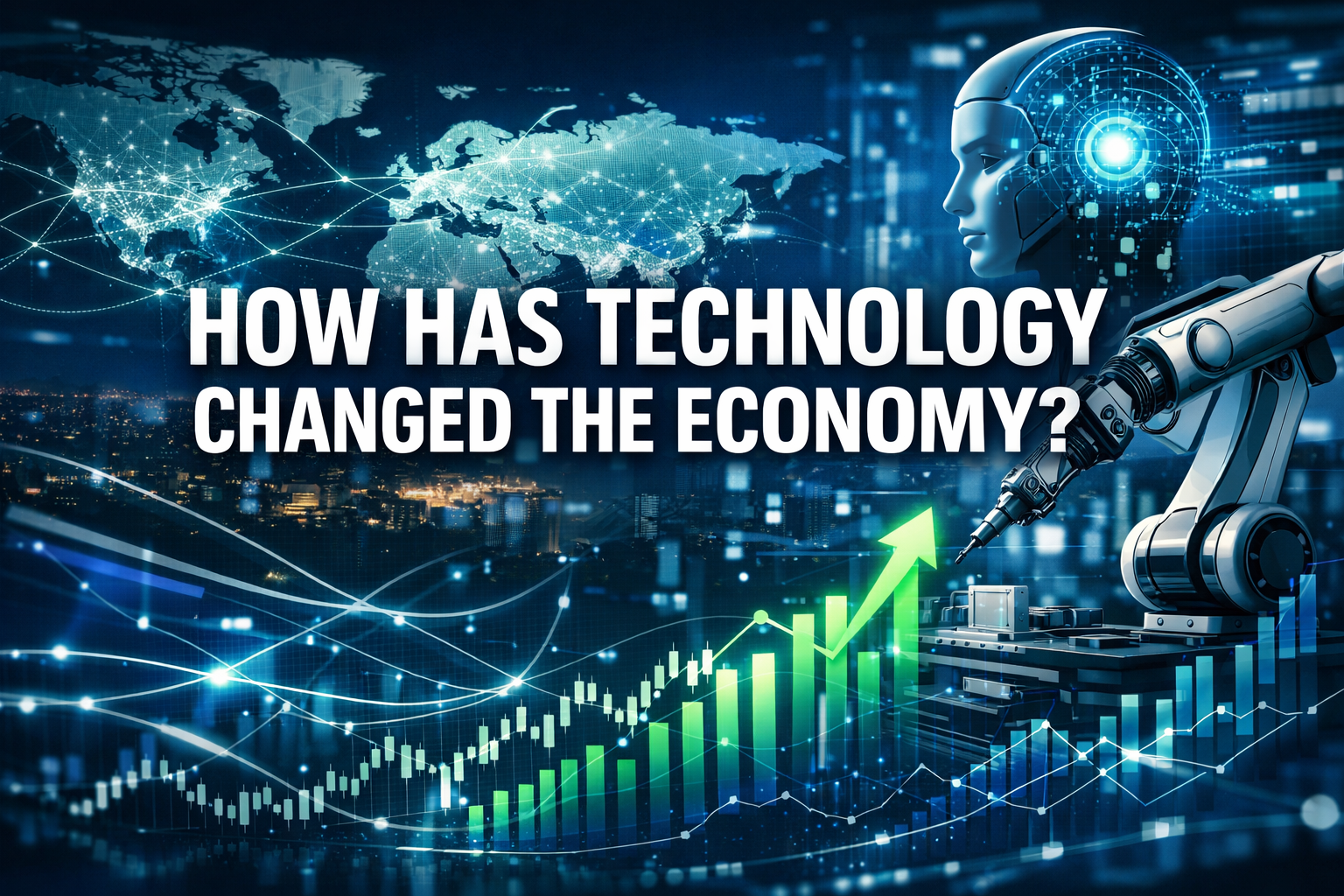
The world economy stands on the precipice of continuous, rapid transformation, driven almost entirely by the relentless march of technological innovation. From the subtle hum of data centers powering global transactions to the intricate dance of robotic arms on factory floors, technology's fingerprints are etched across every facet of our financial lives. Understanding how has technology changed the economy is not just an academic exercise; it's essential for navigating the complexities and seizing the opportunities of 2026 and beyond. This article delves deep into the multifaceted ways technology has reshaped economic landscapes, offering a comprehensive look at its impact on labor, productivity, globalization, and equitable access.
Key Takeaways
- Technology has fundamentally reshaped labor markets, creating new jobs while displacing others, and demanding continuous skill evolution.
- Digital advancements, automation, and AI are significantly boosting productivity and efficiency across industries.
- The global economy is more interconnected than ever, with technology facilitating seamless cross-border trade, communication, and financial flows.
- Technology has democratized access to markets and financial services, empowering small businesses and individuals globally.
- While creating immense opportunities, technology also presents challenges related to income inequality and the digital divide.
The Digital Revolution: Reshaping Economic Foundations
The advent of digital technologies has not merely altered the economy; it has fundamentally reconstructed its very foundations. From the early days of personal computing to the pervasive influence of artificial intelligence and blockchain in 2026, each wave of innovation has brought with it profound economic shifts. Understanding how has technology changed the economy means recognizing this continuous evolution.
From Analog to Algorithmic: A Paradigm Shift
Historically, economic activities were often constrained by physical limitations – geographical distance, manual labor, and slow information transfer. The digital revolution systematically dismantled these barriers. The internet, arguably the most significant technological leap in recent memory, transformed information from a scarce commodity into an abundant resource. This shift empowered businesses with real-time data, connected consumers to global markets, and enabled entirely new business models that were unimaginable just a few decades ago.
Consider the evolution of retail. Once dominated by brick-and-mortar stores, e-commerce platforms now facilitate transactions worth trillions of dollars annually. This transformation isn't just about convenience; it's about algorithmic recommendations, personalized marketing, and efficient global supply chains that optimize everything from inventory to delivery.
Key Digital Economic Drivers:
- Internet Connectivity: The backbone of the modern digital economy, enabling real-time communication and commerce.
- Big Data Analytics: Extracting insights from vast datasets to inform business decisions, predict trends, and personalize experiences.
- Cloud Computing: Providing scalable, on-demand computing resources, reducing infrastructure costs and fostering innovation.
- Mobile Technology: Making digital services accessible anytime, anywhere, driving the gig economy and mobile commerce.
The Rise of the Data Economy
In 2026, data is often referred to as the new oil. Companies like Google, Amazon, and Meta have built empires on collecting, processing, and leveraging vast amounts of user data. This data economy fuels targeted advertising, product development, and predictive analytics, creating enormous value. However, it also raises important questions about privacy, data ownership, and market concentration.
The ability to analyze consumer behavior, market trends, and operational efficiencies at an unprecedented scale allows businesses to make smarter decisions, optimize resource allocation, and innovate faster. This data-driven approach is a core answer to how has technology changed the economy, pushing traditional industries to adapt or risk obsolescence. Learn more about the power of technology in various sectors.
Technology's Impact on Labor Markets and Employment
The relationship between technology and labor has always been a complex dance, marked by both apprehension and progress. As technology advances, particularly with the rise of AI and automation, concerns about job displacement are balanced by the creation of entirely new roles and industries. This dynamic interplay is a crucial aspect when examining how has technology changed the economy.
Automation and Job Displacement
Automation, powered by robotics and artificial intelligence, has significantly altered the nature of work. Repetitive, manual, and even some cognitive tasks are increasingly being taken over by machines and algorithms. Industries like manufacturing, logistics, and even customer service have seen a considerable reduction in human involvement in certain processes.
- Manufacturing: Robotic assembly lines have been a staple for decades, but advanced robotics in 2026 are more dexterous and capable of complex tasks, leading to higher output with fewer human operators.
- Logistics: Warehouses utilize autonomous robots for sorting and moving goods, while AI optimizes delivery routes, reducing the need for extensive manual labor.
- Customer Service: AI-powered chatbots and virtual assistants handle a growing volume of customer inquiries, freeing human agents for more complex issues.
While job displacement is a legitimate concern, it's often a shift rather than an outright elimination of work. Many displaced workers find new opportunities or transition into roles that require different skill sets.
Related Posts:
- How Is Technology Changing Society? A Deep Dive into…
- Is CRM a Technology? Unveiling the Digital Core of…

- How Technology Has Changed the English Language
- How Can Technology Increase Productivity in 2026? A…
- How Does Technology Aid Workplace Productivity in 2026?
- What is Flash Face Technology? Unlocking Precision…

"The robots are coming, but they're not just taking jobs; they're redefining them, demanding a human touch where it matters most: creativity, critical thinking, and empathy."
Job Creation and New Skill Demands
Paradoxically, technology is also a powerful engine for job creation. New technologies require new experts to design, develop, maintain, and manage them. The growth of the tech sector itself has spawned millions of jobs in areas such as:
- Software Development: Engineers for AI, machine learning, cloud platforms, and cybersecurity.
- Data Science: Analysts and scientists who interpret the vast amounts of data generated daily.
- Digital Marketing: Specialists in SEO, content creation, social media, and analytics (a perfect example of how technology has changed the English language through new jargon).
- AI Ethics and Governance: Roles focused on ensuring responsible development and deployment of artificial intelligence.
- UX/UI Design: Professionals who create intuitive and user-friendly digital experiences.
The evolving nature of work means that continuous learning and upskilling are no longer optional but essential. Education systems and vocational training programs must adapt to prepare the workforce for the jobs of tomorrow. This emphasizes the importance of understanding how technology can increase productivity through a skilled workforce.
The Gig Economy and Flexible Work
Technology, particularly mobile applications and platform-based services, has given rise to the "gig economy." This model offers flexibility for workers and provides businesses with on-demand labor. From ride-sharing drivers and food delivery personnel to freelance designers and consultants, the gig economy represents a significant shift in employment structures.
While offering flexibility, the gig economy also presents challenges regarding worker benefits, job security, and regulatory frameworks. Governments and organizations are grappling with how to integrate this new form of work into existing economic and social protection systems.
Boosting Productivity and Efficiency
One of the most undeniable ways how has technology changed the economy is through its profound impact on productivity and efficiency. From automating repetitive tasks to providing powerful analytical tools, technology enables businesses and individuals to accomplish more with fewer resources and in less time.
Automation and Streamlined Operations
Automation is at the heart of modern productivity gains. Robotic process automation (RPA) handles mundane, rule-based tasks in offices, freeing human employees for more strategic work. In manufacturing, advanced robotics not only increase production speed but also improve precision and reduce waste.
Consider the example of supply chain management. AI-powered systems analyze vast datasets to predict demand, optimize inventory levels, and streamline logistics, leading to faster delivery times and reduced operational costs. This level of optimization was impossible before the advent of sophisticated technological tools.
Data-Driven Decision Making
The ability to collect, process, and analyze massive amounts of data in real-time has revolutionized decision-making. Businesses can now:
- Identify market trends: Spot emerging opportunities or threats with greater accuracy.
- Optimize pricing: Adjust prices dynamically based on demand, competition, and inventory.
- Personalize customer experiences: Tailor products, services, and marketing messages to individual preferences.
- Improve operational efficiency: Pinpoint bottlenecks and inefficiencies in processes.
This data-driven approach moves companies from reactive to proactive strategies, leading to more effective resource allocation and better economic outcomes. For insights into related technologies, explore what DNA microarray technology is.
Communication and Collaboration Tools
Modern communication and collaboration technologies have dissolved geographical barriers, allowing teams to work together seamlessly from anywhere in the world. Video conferencing, project management software, and cloud-based document sharing platforms facilitate real-time interaction and information exchange.
This enhanced connectivity not only boosts internal team productivity but also enables global collaboration, allowing businesses to tap into diverse talent pools and expertise, further accelerating innovation. This is a key reason why technology can increase productivity significantly.
Globalization and Interconnected Markets
Technology has been the primary catalyst for the unprecedented level of globalization witnessed in recent decades. The internet, advanced logistics, and digital financial systems have woven a complex web of interconnected markets, profoundly altering how has technology changed the economy.
Breaking Down Geographical Barriers
Before the digital age, international trade and communication were slow, expensive, and often cumbersome. Technology has obliterated these barriers:
- Instant Communication: Email, video conferencing, and messaging apps enable real-time collaboration across continents, making it easier for multinational corporations to operate.
- E-commerce Platforms: Businesses, regardless of size, can now sell their products and services to a global customer base with relative ease. Small artisans can reach customers in distant lands without needing a physical presence.
- Digital Logistics: Sophisticated tracking systems and optimized supply chains ensure that goods can be transported efficiently and transparently across borders.
This interconnectedness has led to a more integrated global supply chain, where components for a single product might originate from dozens of different countries.
Financial Globalization and Fintech
The financial sector has undergone a seismic shift due to technology. Fintech (financial technology) innovations have:
- Facilitated Cross-Border Payments: Digital payment systems allow for faster, cheaper international money transfers, bypassing traditional banking complexities.
- Enabled Global Investment: Platforms provide individuals and institutions access to investment opportunities worldwide, democratizing finance.
- Introduced Cryptocurrencies and Blockchain: These technologies offer decentralized, secure, and transparent ways to conduct transactions and manage assets, potentially revolutionizing financial systems.
The rise of fintech demonstrates how technology is changing society at a fundamental level, especially regarding financial inclusion and market access. Understanding what CRM is as a technology also highlights how digital tools manage customer relationships on a global scale.
The Global Marketplace for Talent
Technology has also created a global marketplace for talent. Remote work capabilities mean that companies can hire the best talent from anywhere in the world, reducing geographical constraints on employment. This has benefits for both employers, who gain access to a wider pool of skilled workers, and employees, who can access opportunities regardless of their location.
This global talent pool fosters innovation by bringing diverse perspectives and skills together, but it also creates competition for local workforces and necessitates global standards for employment and intellectual property.
Democratization of Access and Entrepreneurship
Perhaps one of the most empowering ways how has technology changed the economy is by democratizing access to markets, information, and capital, thereby fostering entrepreneurship on an unprecedented scale.
Lowering Barriers to Entry
Starting a business in the past often required significant capital investment in physical infrastructure, marketing, and distribution channels. Technology has drastically reduced these barriers:
- Cloud Computing: Small businesses can access enterprise-level software and infrastructure without the need for expensive on-premise servers.
- E-commerce Platforms: Platforms like Shopify, Etsy, and Amazon allow individuals to set up online stores quickly and reach a global audience with minimal startup costs.
- Digital Marketing Tools: Affordable and accessible digital marketing tools enable startups to compete with larger players by targeting niche audiences effectively.
- Open-Source Software: Provides free or low-cost tools for development, design, and operations.
This has unleashed a wave of entrepreneurial activity, enabling individuals with innovative ideas to turn them into viable businesses with greater ease.
Access to Information and Education
The internet has made information and educational resources widely accessible. Entrepreneurs can learn about business strategies, marketing techniques, and industry best practices without formal schooling or expensive consultants. Online courses, tutorials, and expert forums provide a wealth of knowledge at their fingertips.
This access to knowledge empowers individuals to develop new skills, pivot their careers, and launch ventures based on informed decisions, contributing to a more dynamic and innovative economy.
Crowdfunding and Alternative Finance
Technology has also revolutionized access to capital. Traditional banks often have stringent requirements, making it difficult for startups and small businesses to secure funding. Crowdfunding platforms, however, allow entrepreneurs to raise capital directly from a large number of individuals.
Furthermore, peer-to-peer lending platforms and other fintech solutions provide alternative avenues for financing, broadening the options available to those seeking to fund their ventures. This shift is a critical component of how technology is changing society by empowering individuals economically.
Challenges and Considerations: Equity and Ethics
While the benefits of technological advancement are undeniable, it's crucial to address the challenges and ethical considerations that arise as how has technology changed the economy. Issues of inequality, privacy, and responsible AI development demand careful attention.
Widening Income Inequality and the Digital Divide
The rapid pace of technological change can exacerbate existing inequalities. Those with the skills to work with new technologies often see their wages increase, while those whose jobs are automated or require outdated skills may struggle. This can lead to a widening income gap.
Furthermore, the "digital divide" – the gap between those who have access to modern information and communication technology and those who don't – remains a significant challenge. Lack of access to reliable internet, devices, and digital literacy training can exclude segments of the population from participating in the modern economy, limiting their opportunities and perpetuating economic disparities.
Data Privacy and Security
As more of our lives and economic transactions move online, concerns about data privacy and cybersecurity grow. Businesses and governments collect vast amounts of personal and financial data, making it vulnerable to breaches and misuse. Protecting this data is paramount to maintaining trust in the digital economy.
Regulations like GDPR and CCPA are attempts to address these concerns, but the challenge of balancing innovation with privacy protection is ongoing. Secure technologies, like those mentioned in what is flash face technology, are becoming increasingly important.
Ethical Implications of AI and Automation
The growing sophistication of Artificial Intelligence and automation raises profound ethical questions:
- Bias in Algorithms: AI systems can inherit and amplify biases present in the data they are trained on, leading to discriminatory outcomes in areas like hiring, lending, or law enforcement.
- Accountability: Who is responsible when an autonomous system makes a harmful decision?
- Control and Autonomy: As AI systems become more capable, questions about human control and the future of work become more pressing.
Addressing these ethical dilemmas requires careful consideration, robust regulatory frameworks, and collaboration between technologists, policymakers, and society at large to ensure that technology serves humanity's best interests.
Conclusion
The question of how has technology changed the economy reveals a landscape transformed beyond recognition in 2026. From the fundamental shift to a data-driven paradigm and the dynamic reshaping of labor markets to the unprecedented levels of global interconnectedness and the democratization of entrepreneurship, technology is the undeniable engine of modern economic evolution. It has unlocked immense productivity gains, fostered new industries, and empowered individuals and businesses in ways previously unimaginable.
However, this transformative power comes with significant responsibilities. The challenges of widening inequality, the digital divide, data privacy, and the ethical implications of advanced AI require proactive and thoughtful engagement. As we move forward, continuous investment in education and reskilling, the development of inclusive technological policies, and robust ethical frameworks will be paramount. Only by addressing these complex issues can we harness the full potential of technology to build a more prosperous, equitable, and sustainable global economy for all.
Next Steps:
- Invest in Continuous Learning: Embrace lifelong learning to adapt to evolving skill demands. Explore online courses and certifications in emerging technologies.
- Advocate for Digital Inclusion: Support initiatives that provide affordable internet access and digital literacy training to underserved communities.
- Engage in Ethical Debates: Participate in discussions about the responsible development and deployment of AI and automation.
- Explore New Business Models: Consider how digital tools and platforms can innovate or optimize your current business or career path.
- Stay Informed: Regularly follow tech news and economic analyses to understand emerging trends and their potential impact.
Frequently Asked Questions: How Has Technology Changed the Economy?
How to Adapt to a Technology-Driven Economy in 2026
Navigating the rapidly evolving economic landscape of 2026 requires strategic adaptation. Here are steps individuals and businesses can take:
Embrace Lifelong Learning and Reskilling
Continuously update your skills, especially in areas like digital literacy, data analysis, AI fundamentals, and critical thinking. Online courses, certifications, and vocational training are invaluable for staying relevant in the job market. Businesses should invest in employee training programs.Leverage Digital Tools for Productivity
Utilize cloud computing, collaboration software, and automation tools to enhance efficiency in daily tasks. For businesses, this means adopting CRM systems, AI-powered analytics, and optimizing supply chains with technology.Prioritize Cybersecurity and Data Privacy
Implement strong cybersecurity practices for both personal and business data. Understand data privacy regulations (e.g., GDPR, CCPA) and build trust with customers by transparently handling their information.Foster Innovation and Adaptability
Encourage a culture of innovation, experimentation, and rapid adaptation. For businesses, this might involve agile methodologies and investing in R&D. Individuals should be open to new career paths and entrepreneurial opportunities facilitated by technology.Network and Collaborate Globally
Utilize technology to connect with professionals and markets worldwide. Remote work and global collaboration platforms can open up new opportunities for individuals and expand market reach for businesses.Key Defined Terms in the Technology-Driven Economy
- Artificial Intelligence (AI) The simulation of human intelligence processes by machines, especially computer systems, including learning, reasoning, and self-correction.
- Automation The use of technology to perform tasks with minimal human assistance, often to increase efficiency, productivity, and safety.
- Gig Economy A labor market characterized by the prevalence of short-term contracts or freelance work, as opposed to permanent jobs, often facilitated by online platforms.
- Digital Divide The gap between those who have ready access to the internet and communication technologies, and those who do not.
- Fintech Technology that aims to improve and automate the delivery and use of financial services, often bypassing traditional banks.
- Cloud Computing The delivery of on-demand computing services—from applications to storage and processing power—over the internet, typically on a pay-as-you-go basis.
